
"use sieve"
2000 article(s) found
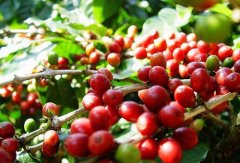
How are coffee beans classified according to the proportion of sieve and defective beans?
The classification of defective beans according to the proportion of sieve and defective beans is an important factor to destroy the flavor of the final coffee. Therefore, defective beans should also be removed in the last step of raw bean processing. Therefore, according to the proportion of defective beans, supplemented by the size of the screen is also used as a way of classification. Due to the rise of boutique coffee, coffee producing countries pay more and more attention to the quality of coffee, and the control of defective beans is the most important way.

Graded coffee raw bean treatment
At present, there are three main rating criteria for raw coffee beans, and different countries adopt different rating methods according to their own production conditions and national conditions (not all coffee producing countries adopt the same method). Let's introduce these three popular rating methods. One: the reason for the emergence of such a classification standard according to the altitude of the coffee producing area is mainly because of the high level.
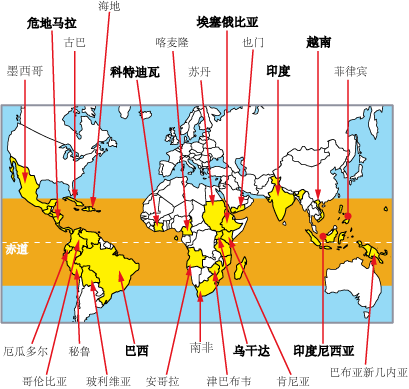
Coffee Common sense Coffee grading system summarizes the selection of classification methods in various countries to determine the altitude of coffee origin
First of all, we should know clearly that the factors that ultimately determine the flavor of coffee come from the environment of its producing area, the way of treatment and the quality of raw beans. I believe that without better raw beans, no matter how good the roaster will not bake amazing coffee. Of course, when good coffee beans are in the hands of baristas, baristas should fully understand their characteristics and then add icing on the cake.
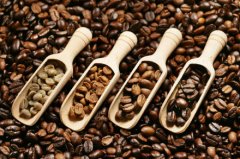
Coffee and its products-- terminology (2)
Pulper--mipped bean cut or scraped wet processed coffee beans, often with brown black scars. 3.20 Brown coffee beans brown bean brown-black coffee beans. 3.21 White coffee beans white bean are simply called white beans, that is, coffee beans with a white surface. 3.22 Amber beans amber bean yellow coffee beans

Manual bean grinder sieving powder usage which brand is good and how to clean
Manual bean grinder how to use which brand is good how to clean if a bean grinder with poor uniformity is used for Italian production, it is easy to thicken the powder particles distributed in a certain part (or possibly multiple parts) of the coffee pressed powder. High-pressure water flow will quickly squeeze out from these pressed powder's thinner vulnerabilities, forming one or more channel effects, so that local coffee powder is overextracted.

Simple how to use Vietnamese coffee pot how to use Vietnamese coffee pot
Vietnamese coffee pot is probably what we know most about Vietnam, a neighboring country. Vietnam, once a French colony, began to grow coffee around 1860. The unique history has formed the unique flavor and connotation of Vietnamese coffee. Vietnamese coffee pot plays an important role in this, and it is also the most important coffee utensils for Vietnamese coffee.

Tanzania AA Coffee Bean Sieve size characteristics Flavor Description Taste Estate Introduction
Tanzania AA Coffee Bean Sieve size Features Flavor Description Manor Introduction Tanzania's main coffee growing area is located at the foot of Mount Kilimanjaro, which has rich volcanic soil. Coffee trees planted here are more than 100 years old. The earliest coffee was first introduced from Kenya by Christians. Coffee trees must be carefully cared for, weeded and fertilized.
Basic knowledge of fine coffee grading of raw coffee beans
At present, there are three main rating criteria for raw coffee beans, and different countries adopt different rating methods according to their own production conditions and national conditions (not all coffee producing countries adopt the same method). Let's introduce these three popular rating methods. One: the reason for the emergence of such a classification standard according to the altitude of the coffee producing area is mainly because of the high level.

Steps for the use of dripping coffee pot in Vietnam
Follow the caf é (Wechat official account vdailycom) and find that Vietnam Coffee, which opened a small shop of its own, is probably what we know most about Vietnam, a neighboring country. Vietnam, once a French colony, began to grow coffee around 1860. The unique history has formed the unique flavor and connotation of Vietnamese coffee, in which Vietnam drip coffee pot plays a role.
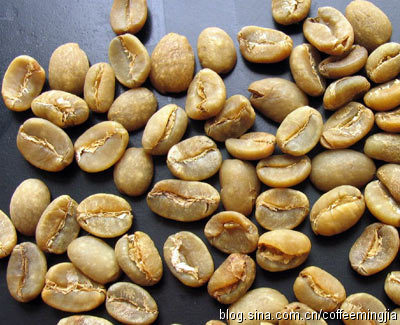
Introduction to the main points of the knowledge of raw coffee beans: a detailed explanation of the classification of raw coffee beans
The last step in the processing of raw coffee beans is grading, so what are the grading methods of raw coffee beans? Do different countries adopt the same approach? At present, there are three main rating criteria for raw coffee beans, and different countries adopt different rating methods according to their own production conditions and national conditions (not all coffee producing countries adopt the same method).

A brief introduction to the grading system of Kenyan Coffee beans how to brew and share Kenyan coffee at a ratio of 1 to 15
Professional coffee knowledge exchange more coffee bean information please follow the coffee workshop (Wechat official account cafe_style) front street-Kenya raw bean grading, brewing parameters sharing according to the sieve grading method is the method of grading according to the size of coffee beans. Raw beans are graded by determining the size of the beans through a holed iron plate sieve. The size of the hole in the screen is 1 inch to 64 inches.
Grindability of hand-brewed coffee | what is the effect of fine powder on brewing coffee? should we sift out the subdivision?
Back in 2012, our own Matt Perger won the World Coffee Brewing Competition by removing fine powder with a 250m sieve. This makes the extraction more uniform, so that he can extract a higher content without producing a dry, over-extracted flavor. But from then on, he came out and declared that Fine Powder was the devil. Actually, our last one
Grading defective beans according to the proportion of sieve and defective beans is an important factor that destroys the flavor of the final coffee.
Boutique coffee (specialty coffee) is also called specialty coffee selection coffee. It refers to coffee made from a small number of raw beans with excellent taste grown in an ideal geographical environment. Depending on the special soil and climatic conditions in which they grow, they have outstanding flavor. After strict selection and classification, this kind of coffee is hard in texture, rich in taste and stylish.
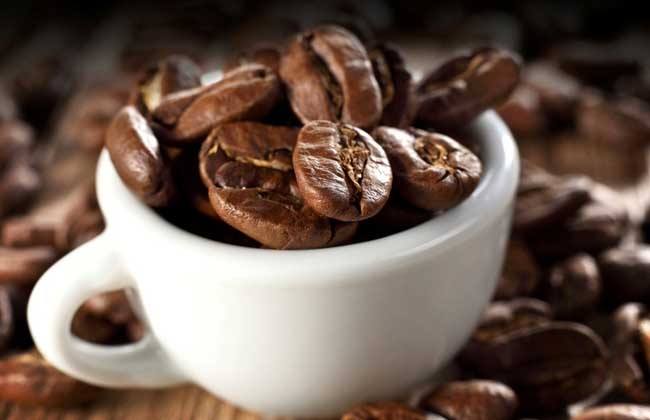
Brazilian coffee bean producing area, Brazilian coffee bean grade
Following Cafe Review (official Wechat account vdailycom) found that Brazilian Coffee, which opened a small shop in Fairview Cafe, had a low sour taste, matched with the sweet and bitter taste of coffee, and had a slight grassy aroma, with a slightly bitter taste in the fragrance, smooth taste and pleasant aftertaste. There are no outstanding advantages for Brazilian coffee.

Use vibrating screen to select coffee beans and peanuts
I saw on the Internet yesterday that someone asked if the vibrating screen could screen peanuts and coffee beans, and the answer was yes. In the following, some problems and solutions of vibrating screen in screening these two materials are discussed. First of all, customers need to know the number of peanuts and coffee beans, and then choose the appropriate sieve, which is like screening peanut and coffee beans.
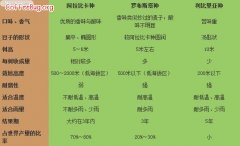
The basics of coffee beans
Coffee belongs to the evergreen shrub of the genus Rubiaceae, which is centered in the tropics. There are about 6000 species of Rubiaceae belonging to 500 genera. Coffee has always been thought to have certain effects, such as strengthening the stomach, waking up the brain, stopping bleeding, dissipating heat, strengthening the body, and so on. The more famous Rubiaceae plant is Gardenia jasminoides, whose fruit was dried and used as medicinal material a long time ago.

The basic knowledge of coffee beans coffee three original species introduction
Coffee belongs to the evergreen shrubs of the genus Coffee of Rubiaceae, centered in tropical regions, with about 500 genera and 6000 species of Rubiaceae plants distributed here. Coffee has long been thought to have certain medicinal effects, such as invigorating stomach, refreshing mind, stopping bleeding, dissipating heat, strengthening body, etc. More famous Rubiaceae plants and gardenia, its fruit has long been dried as medicine

What is the difference between the grinding degree of coffee beans? Coffee utensils suitable for different degrees of grinding?
Professional coffee knowledge exchange more information about coffee beans Please follow the coffee workshop (Wechat official account cafe_style) what is the difference in the grinding thickness of coffee beans? What kind of equipment is suitable for different degrees of grinding? Although in theory, the finer the coffee bean is ground, the easier it is to dissolve antioxidants, but in practice, it is still necessary to consider the way of brewing coffee and the brewing time.

The effect of Grinding degree of Coffee Powder on Flavor how to determine the Grinding degree of hand pressing and Cold extraction
Professional coffee knowledge exchange more coffee bean information please follow the coffee workshop (Wechat official account cafe_style) Coffee is bitter? So sour? Everyone wants to drink good coffee, sweet and palatable, with explosive aroma and long aftertaste, and hope to drink this kind of coffee every time. There are many factors that affect the taste of coffee: time, temperature, brewing equipment, etc.